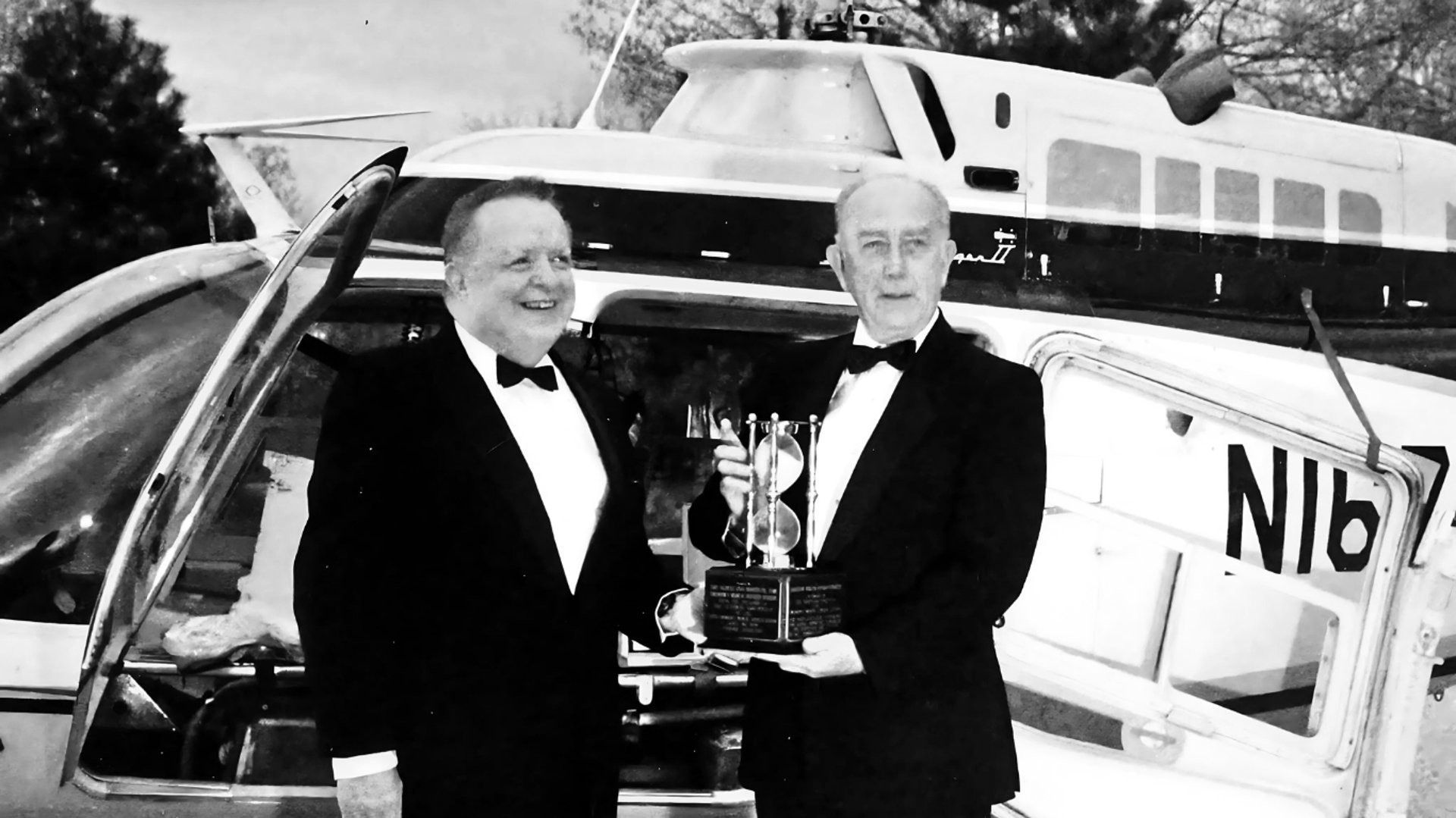
Dr. R Adams Cowley didn't just change emergency medicine—he revolutionized it. His groundbreaking work earned him recognition from the highest levels of government, professional organizations, and communities worldwide.
Dr. Cowley's service to his country began in uniform and continued throughout his life. His military experience shaped his understanding of trauma and influenced his lifesaving innovations.
Awarded by Congress in 1980, this honor recognized Dr. Cowley's extraordinary contributions to trauma medicine. Few physicians receive recognition at this level, highlighting the national impact of his work.
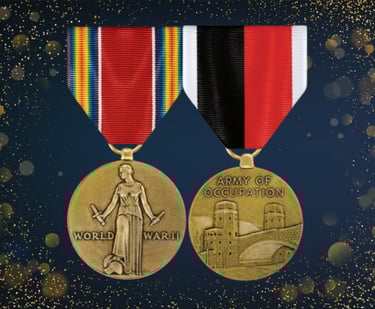
His service during and after World War II earned him both the Victory Medal and the Army Occupation Medal. These experiences treating battlefield injuries laid the foundation for his later trauma innovations.
Recognition from the FBI for his contributions to emergency response systems and trauma care that supported law enforcement operations.
In July 2013, national leaders in both the U.S. House of Representatives (H.R. 2782) and the Senate (S. 1345) united behind the Dr. R. Adams Cowley Congressional Gold Medal Act—an extraordinary testament to Dr. Cowley's enduring impact on trauma care. The legislation called on congressional leadership to arrange a posthumous award of the Congressional Gold Medal, reflecting how profoundly his vision shaped emergency medicine, the Shock Trauma model, and lifesaving practices worldwide.
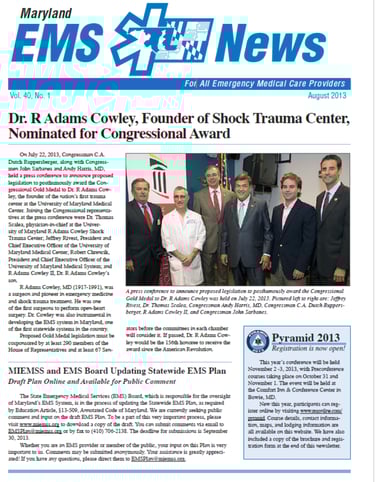
Click image to view Congressional Award nomination document
Throughout his career, Dr. Cowley's peers and professional organizations consistently recognized his exceptional contributions to medicine.

In 1961, Dr. Cowley joined the ranks of the nation's most influential physicians when he was included in American Men of Medicine, highlighting his early impact on the field.
The Advertising Club of Maryland named him a Distinguished Marylander in May 1977, recognizing his transformative impact on healthcare in the state.
The Maryland State Firemens Association awarded him Certificates of Appreciation in 1977 and 1979, acknowledging how his system transformed emergency response.
Dr. Cowley held several groundbreaking leadership roles that helped define the field of trauma and emergency medicine. His academic appointments and founding directorships shaped clinical care, policy, and research at both the state and national levels—earning recognition from the U.S. Congress and the President.
University of Maryland, School of Medicine
Pennsylvania State University
Maryland Institute for Emergency Medical Services Systems (MIEMSS)
Charles McC. Mathias Jr. National Study Center — approved by U.S. Senate and House, signed into law by President Ronald Reagan.