Dr. R Adams Cowley didn't just change emergency medicine—he revolutionized it. As the visionary behind the "Golden Hour" concept and founder of America's first trauma center, he created a system that saves thousands of lives every year. His innovations transformed how we treat critically injured patients worldwide, proving that quick, specialized care makes the difference between life and death.
This website is a tribute to the extraordinary life and legacy of Dr. R Adams Cowley, the father of modern trauma medicine.
Within these pages, you'll uncover the bold decisions, pioneering innovations, and relentless drive that forever changed how we care for the critically injured. From the first civilian medevac flights to the founding of the nation's first Shock Trauma Center, Dr. Cowley's vision wasn't just ahead of its time—it continues to save lives today.
Explore his journey. Witness the impact. Carry the legacy forward.
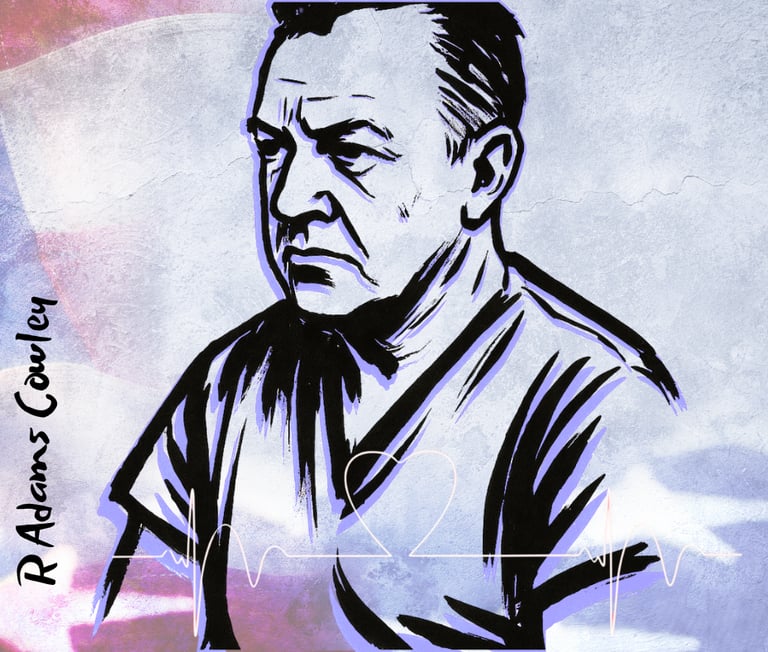
"There is a golden hour between life and death. If you are critically injured you have less than 60 minutes to survive. You might not die right then; it may be three days or two weeks later — but something has happened in your body that is irreparable."— R Adams Cowley, M.D.
Dr. Cowley coined the term Golden Hour after years of observing trauma patients. He noticed that patients who received definitive care within 60 minutes had dramatically better outcomes than those who waited longer. What began as a clinical observation became the organizing principle for modern trauma systems worldwide.
Imagine a world where a critical injury meant a slim chance of survival—where trauma patients had to rely on luck rather than life-saving expertise. That was the reality before Dr. R Adams Cowley changed everything.
Dr. Cowley wasn't just a doctor—he was a visionary who saw what others didn't. He believed that the first 60 minutes after a severe injury—the Golden Hour—could mean the difference between life and death. And he built an entire system to make sure more lives were saved.
From founding the world's first dedicated trauma center to pioneering helicopter medevacs and emergency medical services (EMS), Dr. Cowley reshaped modern trauma care. His relentless determination and groundbreaking research laid the foundation for the trauma systems we rely on today.
His story is one of passion, perseverance, and purpose. It's about a man who worked tirelessly—sometimes sleeping on hospital X-ray tables—to make sure no one died because they couldn't get the right care in time.
Whether you're a medical professional, a history buff, or someone who has ever relied on emergency care, this site is dedicated to sharing the incredible legacy of Dr. R Adams Cowley—the Father of Trauma Medicine. His work continues to save lives every single day.
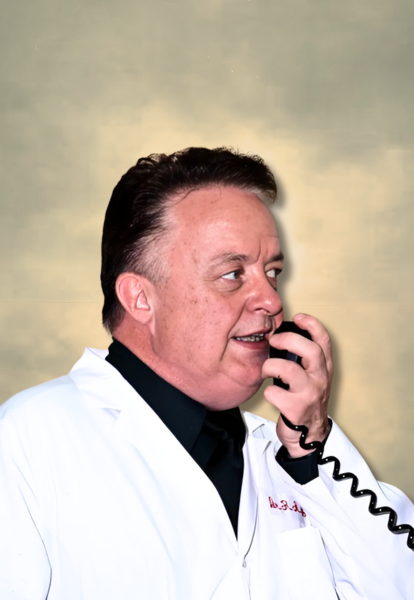
Dr. Cowley demonstrating a portable satellite station, 1977—advancing emergency medical communication.
No Protocols. No Specialization. No Urgency. Interns often staffed emergency rooms. Hospitals lacked specialists and critical tools. Transport was just a ride—no trained medics, no treatment en route. The "Golden Hour" didn't exist yet, and no one realized how deadly those delays could be.
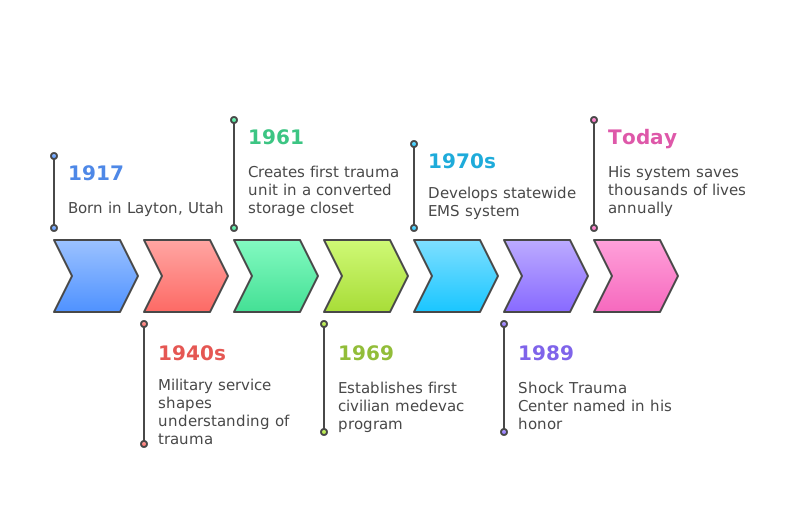
Cowley Refused to Accept That. He didn't just theorize—he acted. Frustrated by watching patients die from treatable injuries, he took matters into his own hands. With his own money, he turned a storage closet at University Hospital into a two-bed trauma unit. That tiny space became the world's first dedicated trauma center.
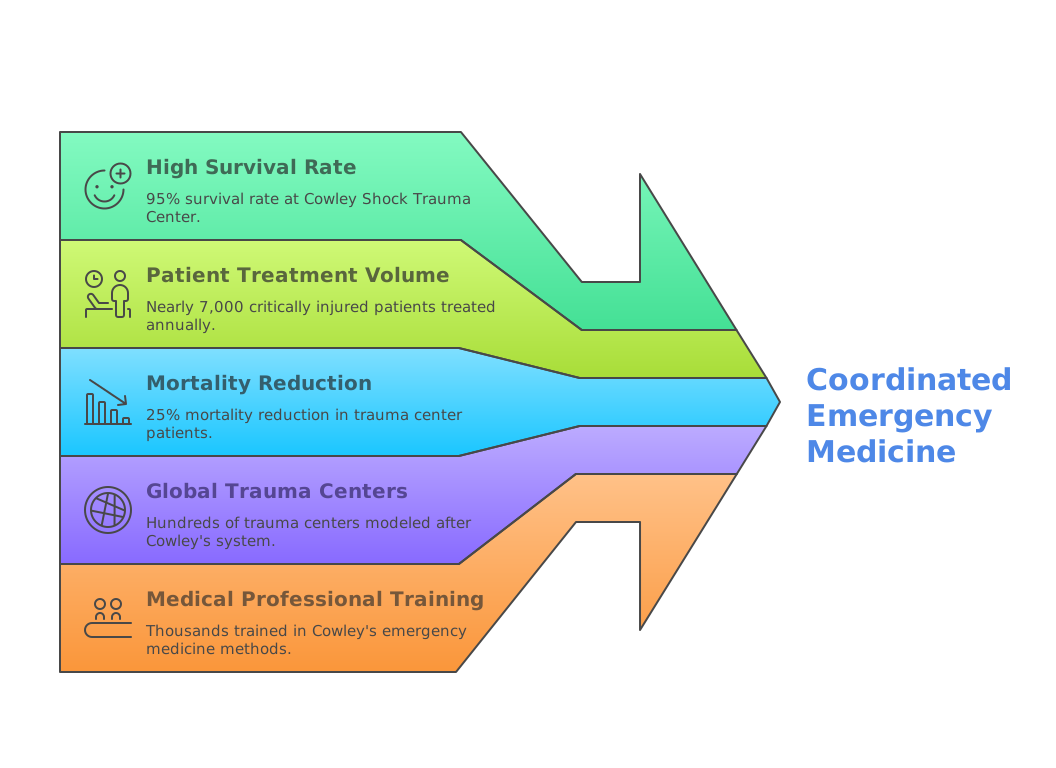
From a Closet to a Global Model. His system saved lives. What began as a makeshift lab evolved into the R Adams Cowley Shock Trauma Center—now treating nearly 7,000 critically injured patients each year with a 95% survival rate.
Today, every modern trauma system—across states, countries, and militaries—follows Dr. Cowley's blueprint. He didn't just improve trauma care. He built a system that still saves lives every day.
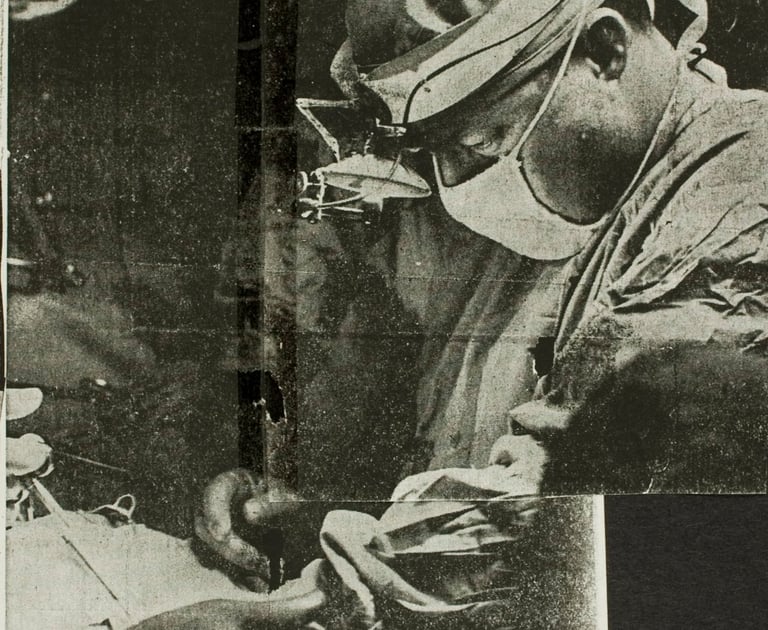
Dr. Cowley performing open-heart surgery.
Dr. Cowley revolutionized more than trauma care—he built an entire system that still saves lives today. His breakthroughs shaped everything from medevac helicopters and damage control surgery to EMS networks and trauma rehabilitation.
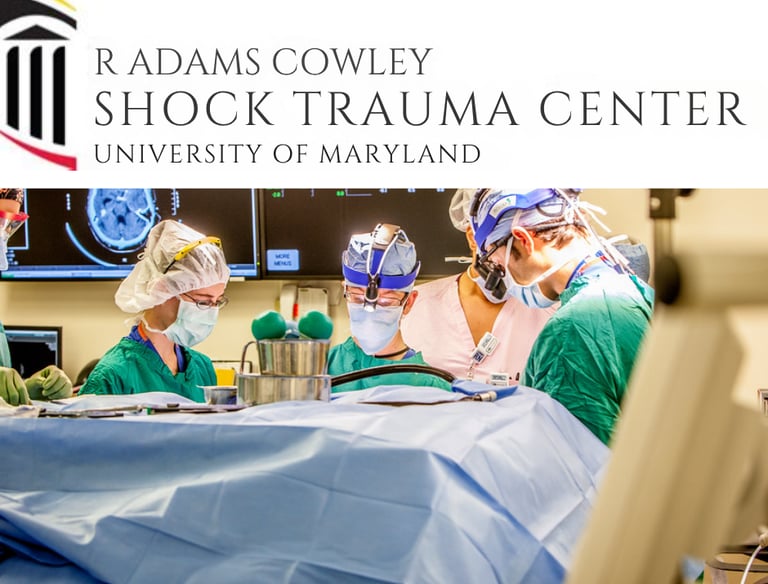
Established the nation's first clinical shock trauma unit in 1961, revolutionizing emergency care and creating a model for trauma centers worldwide.
Pioneered the "Golden Hour" principle, emphasizing the critical importance of rapid trauma care in the first 60 minutes after injury.

Developed Maryland's groundbreaking emergency medical services system, which became the blueprint for modern trauma networks.

Established the first civilian medical evacuation helicopter system in the U.S. (1969). Ensured trauma patients were transported to the best-equipped hospital, not just the nearest one.
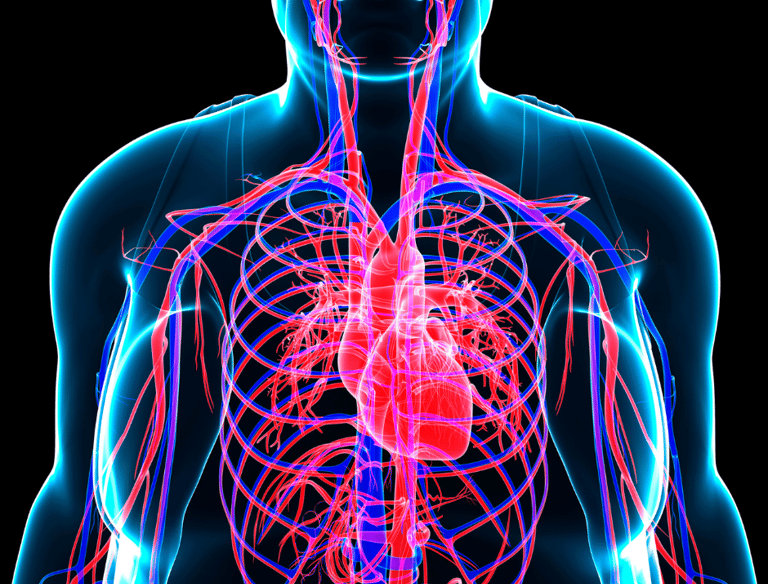
Described shock as "a momentary pause in the act of death" and dedicated his research to combating its deadly effects, developing fluid resuscitation techniques and trauma-induced organ failure treatments.

Dr. Cowley knew trauma care couldn't stop at survival. He built an integrated rehab model connecting Shock Trauma with Montebello Hospital—ensuring patients stayed with the same care teams through recovery.
Dr. Cowley's vision transformed emergency medicine from a fragmented approach to a coordinated system of care.
The achievements Dr. Cowley laid down continue to evolve and save lives. In May 2024, Maryland Governor Wes Moore signed significant funding bills—the first major increase for the statewide trauma system in nearly three decades—securing the future of trauma care for Marylanders.
This investment advances Dr. Cowley's vision, adapting to new challenges while upholding the core principle that rapid, specialized care can mean the difference between life and death.

We welcome your inquiries and feedback. Connect with us to learn more about Dr. R Adams Cowley's legacy and achievements.
This will open your email client addressed to cowleyroberta@gmail.com
Have questions or want to learn more about Dr. R Adams Cowley's legacy? We'd love to hear from you.